


Excessive pressure inside the shelter plays a critical role in ensuring its protection and safety.
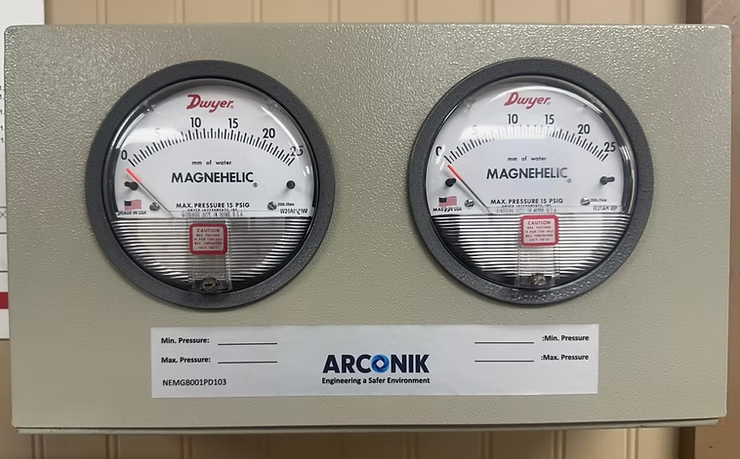
About excessive pressure
Positive differential air pressure, or overpressure, refers to the pressure difference between two areas, rooms, or other measurement points. When referring to overpressure in a shelter, this describes a situation where the air pressure inside the shelter is higher than the pressure outside the shelter or in another shelter compartment (such as an airlock). Overpressure is always measured relative to another point. This pressure difference can be used to control airflow and prevent contaminants from entering the shelter.
How to create positive pressure in a shelter
To put it simply, if the amount of air forced into the chamber exceeds the amount of air expelled through the various openings, excess pressure builds up. Here’s a good example: inflating a balloon.
There are a few key points to consider when creating positive pressure in a shelter:
The room/protected area must be as airtight as possible; that is, every structural opening must be airtight. For example, gas-tight doors, shutters, and windows, as well as protected cable and pipe wall penetrations, air ducts, and other protective elements, must be equipped with special seals to prevent air from escaping.
Air filtration and ventilation systems must draw in or expel a sufficient volume of air to create positive pressure within a shelter.
To keep the overpressure level within the specified range, overpressure control devices, such as overpressure relief valves, must be installed.